
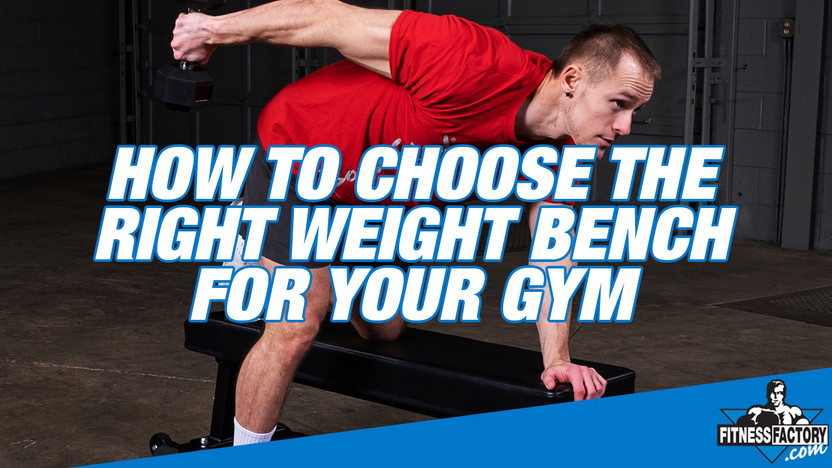
How to Choose the Right Weight Bench for Your Gym
Posted by FitnessFactory.com on 06.02.26
The weight bench is the undisputed anchor of any serious training space. Whether you’re setting up a garage gym or outfitting a commercial facility, your bench dictates the range of exercises you can perform and the safety with which you can perform them.
But with options ranging from simple flat platforms to complex adjustable systems, how do you know which one fits your specific goals?
Choosing the right weight bench is one of the highest-impact decisions in building a home gym or commercial facility. Here is a breakdown of the main bench types, what each one does well, and the specific models worth considering at FitnessFactory.com.
The Foundation: Flat Benches
If your training focuses on the "Big Three" (Squat, Bench, Deadlift) or heavy dumbbell work, a high-quality flat bench is a non-negotiable.
Because they have no moving parts, flat benches are often more stable and can handle significantly higher weight capacities.
- Top Choice: The Rugged XL Flat Bench is built for those moving serious iron, boasting a massive 1,500 lb. weight capacity.
- Best for Commercial Spaces: The Pro Clubline SFB125 offers the rock-solid stability required for high-traffic facilities where durability is the priority.
A flat bench is also the lowest-maintenance setup in a home gym. No moving parts means nothing to adjust, nothing to fail under load. If your programming is barbell-centric and you already have a power rack, a flat bench paired to that rack is usually all you need.
The Versatility King: Adjustable Weight Benches (FID)
For those who want to target the upper chest with incline presses or the lower pectorals with decline work, an Adjustable (or FID — Flat, Incline, Decline) bench is the way to go. These are the "Swiss Army Knives" of the gym.
- The All-Rounder: The Body-Solid GFID71B Heavy Duty Bench is a staple for home and light commercial use, providing multiple adjustment angles and a stable base.
- The Space Saver: If you’re working in a tight apartment or a multi-purpose room, the Powerline PFID25X Folding Weight Bench offers seven positions but can be tucked under a bed or in a closet when the workout is over.
One thing worth knowing about FID benches: pad quality matters more here than on a flat bench, because you're adjusting your body position between sets. High-density foam holds its shape over years of use. Cheaper foam compresses within months, which shifts your body position and can affect your pressing mechanics in ways that are hard to diagnose. We see this difference clearly across the brands we carry.
Specialized Performance: Olympic Benches
If you prefer training with a full-sized Olympic barbell rather than dumbbells, you need a bench with integrated uprights. This removes the need for a separate power rack and provides a dedicated station for heavy pressing.
- Maximum Utility: The Body-Solid PowerCenter Olympic Bench holds your barbell but also accepts attachments like leg developers, turning a single footprint into a full-body station.
This is a strong option for anyone building a home gym around a single piece of equipment rather than a full rack system.
The tradeoff with an Olympic bench is less flexibility than an FID setup — most are optimized for flat and incline presses with a bar, not dumbbell work across multiple angles. If barbell pressing is your primary movement and you're not sure you'll add a full rack later, this is a clean, cost-effective starting point.
What to Look For Before You Buy A Weight Bench
Before adding a bench to your cart, run through this quick checklist: These are the criteria our experts use when helping customers narrow down their options, whether in our Forest Park and Aurora showrooms or through live chat.
Weight Capacity
Don't just count the plates on the bar; remember to include your own body weight. If you weigh 200 lbs and plan to bench 300 lbs, you need a bench rated for at least 500 lbs. High-end options like the Body-Solid Pro Clubline SFI20 are rated for heavy-duty use, so you never feel a "wobble" mid-lift.
Pad Density and Gap
On adjustable benches, look at the gap between the seat and the back pad. A smaller gap provides better support for your lower back during flat benching. Additionally, high-density foam (like that found on the Pro Clubline SFID425) will maintain its shape over years of use rather than flattening out.
Ease of Movement
If you use your bench inside a power rack for chest presses but move it out for dumbbell rows, look for a model with integrated transport wheels. Most commercial-grade adjustable benches include these to make repositioning effortless.
The right bench should be an investment that lasts a decade, not just a season. Choose the one that matches your strongest future self.
Rack Compatibility
If you plan to use your weight bench inside a power rack, check the bench dimensions against your rack's interior footprint before ordering. Most Body-Solid and Powerline benches are designed to pair directly with Body-Solid rack systems, but width and height vary. Our team can confirm compatibility — just reach out via live chat or call us at (800) 383-9300.
The right bench should be an investment that lasts a decade, not just a season. The models above are ones our team stands behind based on quality, value, and real-world use across home and commercial settings. Choose the one that matches your strongest future self.
What Weight Bench Buyers Are Saying
Real Feedback From FitnessFactory.com Customers
We hear a lot from customers who've had their benches for years and put them through real training. Not short-term showroom impressions, but detailed feedback from long-term home gym and commercial-style use.
Across different types of weight benches, a few things come up consistently: stability under heavy loads, long-term durability, and how well the bench fits the way they train and the space they’re working with.
Another common theme we see is people don’t tend to replace these weight benches. Once they buy one that’s built right, it stays in their setup for years. You’re not buying something temporary, you’re buying an important part of your strength training setup.
Rugged Flat Incline Bench (1,500 lb. capacity):
"I have been working out for the past 20 years in a variety of settings and this bench is as good as anything that I have ever used. I'm 6'2" 235lbs and love how long and wide this bench is." — Verified Buyer
"Heavy and very solid built to last. This is on par with all the top gyms." — Verified Buyer
Body-Solid GFID71B Heavy Duty FID Bench:
"I've owned this bench since 2008. I couldn't ask for more in a bench. If you want a commercial grade bench, get this one. You'll pass this bench down to your kids." — Verified Buyer, owned since 2008
"I am a personal trainer and I really like the stability of this bench. It is very helpful to me as a great training tool." — Verified Buyer, Personal Trainer
Powerline Folding Weight Bench (7 Positions):
"This bench works great especially in small places. Out of the box took me about 1 minute to setup. Bench is constructed well and seems pretty strong. The nicest part for people who have limited space is the way it can fold flat for storage." — Verified Buyer
"If you have limited space and want a good freeweight workout this is perfect. Easily folds for storage, easy to move." — Verified Buyer
Body-Solid Leverage Flat Incline Decline Bench:
"It's a tank. It's heavy, much more sturdy than the junk you find at Sport Authority, Big 5, etc. Durable, sleek, powerful, adjustable. Made for people who actually use the gear they buy." — Verified Buyer
Ready to Buy a Weight Bench?
We're here to help! If you're in the Chicagoland area, our showrooms in Aurora and Forest Park have these benches on the floor. Come and try them before you commit.
Not local? Our US-based consultants are available by live chat at FitnessFactory.com or by phone at (800) 383-9300. Every order ships fast and free. Browse our entire selection of weight benches online at fitnessfactory.com/racks-benches/benches.
Weight Bench FAQs
Purchasing a Weight Bench From FitnessFactory.com
How do I buy a weight bench online?
Browse our weight bench lineup, pick the model that fits your training and your space, and add it to your cart. Not sure where to start? Our team has been matching people with the right equipment since 1988. Give us a call or chat and we'll point you in the right direction.
Do weight benches ship free?
Yes, weight benches ship free from FitnessFactory.com to the contiguous US. If you're in the Chicagoland area, you can also stop by our Forest Park or Aurora showroom, see the benches firsthand, and often save on delivery compared to ordering online.
What is the return policy on weight benches?
We offer a 31-day return policy. If the bench isn't the right fit, reach out within 31 days of delivery and we'll take care of it. We recommend holding onto the original packaging until you're sure it works for your setup.
Do weight benches come with a warranty?
Yes. Body-Solid and Powerline benches are backed by manufacturer warranties. Coverage varies by model and component, and full details are listed on each product page. Not sure what's covered on a specific bench? Our team can walk you through it before you buy.
Can I see weight benches in person before I order?
Absolutely. Our Forest Park and Aurora showrooms carry a working selection of benches so you can check the build, test the feel, and buy with confidence. That's one of the real advantages of working with a specialty retailer.